For my final knit collection, I was inspired by Frank Lloyd Wright and his impact on the organic architecture movement.
To make the collection sustainable, I decided to make the entire collection out of WEGANOOL. Nearly all aspects of the WEGANOOL production process are sustainable. The fiber itself is plant-based and made out of 70% cotton, 5% Calotropis Pod Fibers, and 25% Calotropis Stem Fibers. Calotropis grows wildly and needs no care. The entire production process is mostly hand-done, lowering the carbon footprint even more and creating jobs.
The production process is also waste-free. All of the unused plant leftovers are fermented and mixed with herbs to create ARKA, a bio-pesticide/insect repellent.
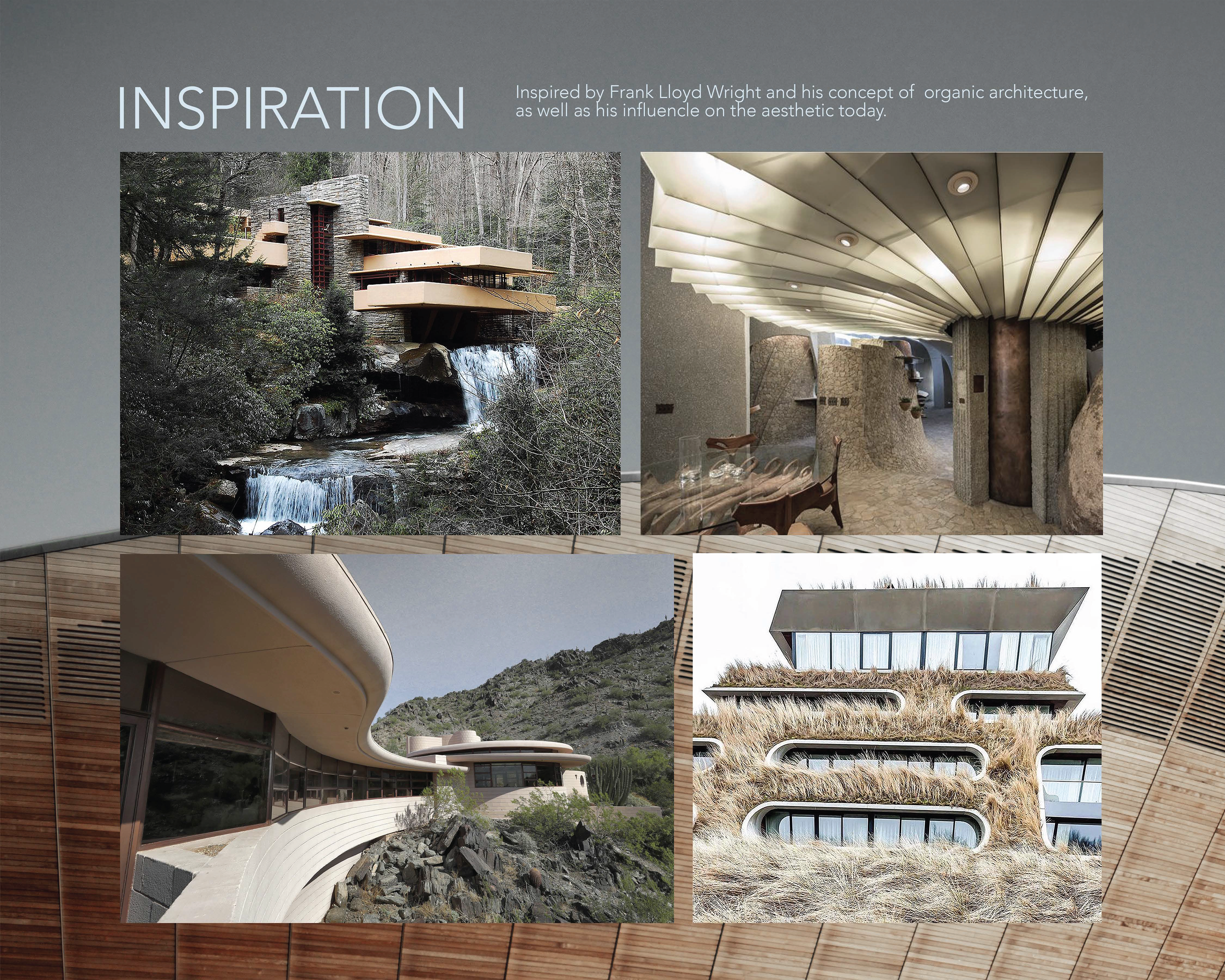
I decided to not only focus on Wright's architecture, but his impact on the movement as a whole. I took direct inspiration from specific works having to do with organic architecture throughout the century, whether the architects were directly inspired by Wright or the organic architecture aesthetic as a whole.
The collection explores how the organic architecture movement has changed over the years, as well as how Frank Lloyd Wright's forward-thinking design style has and continues to inspire countless architects.
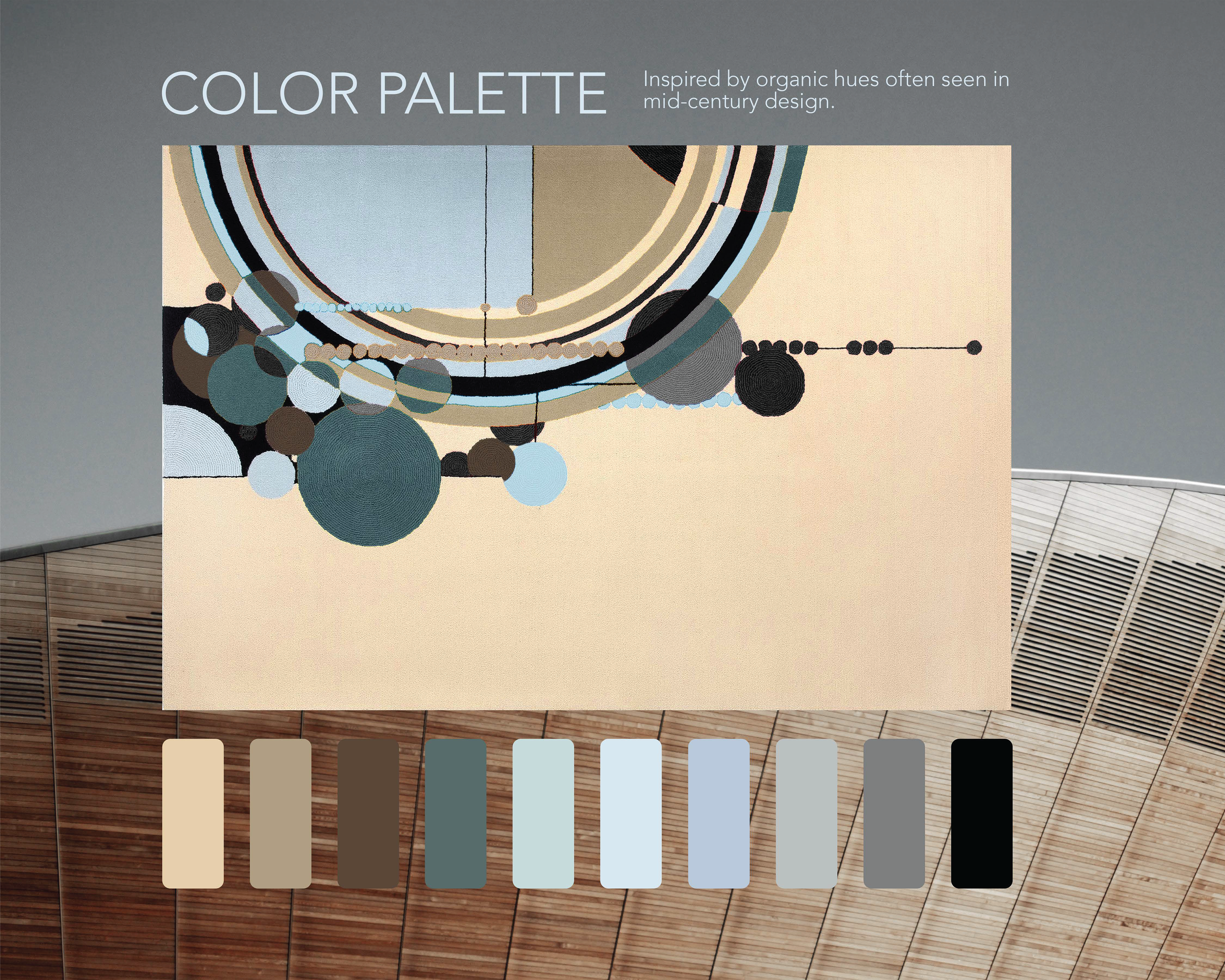
My color palette is inspired by organic hues often seen in mid-century design. I decided to use a mid-century inspired palette because I felt it made sense to choose a period in the middle of the century, as the collection spans over many periods.
The image pictured is a rug from a collaboration between the Frank Lloyd Wright Foundation and Classic Rug Collection. The rug was designed by Barbara Barran, the founder of Classic Rug Collection. She had a deep connection to Frank Lloyd Wright, giving her the ability to create a design that connected to his art.
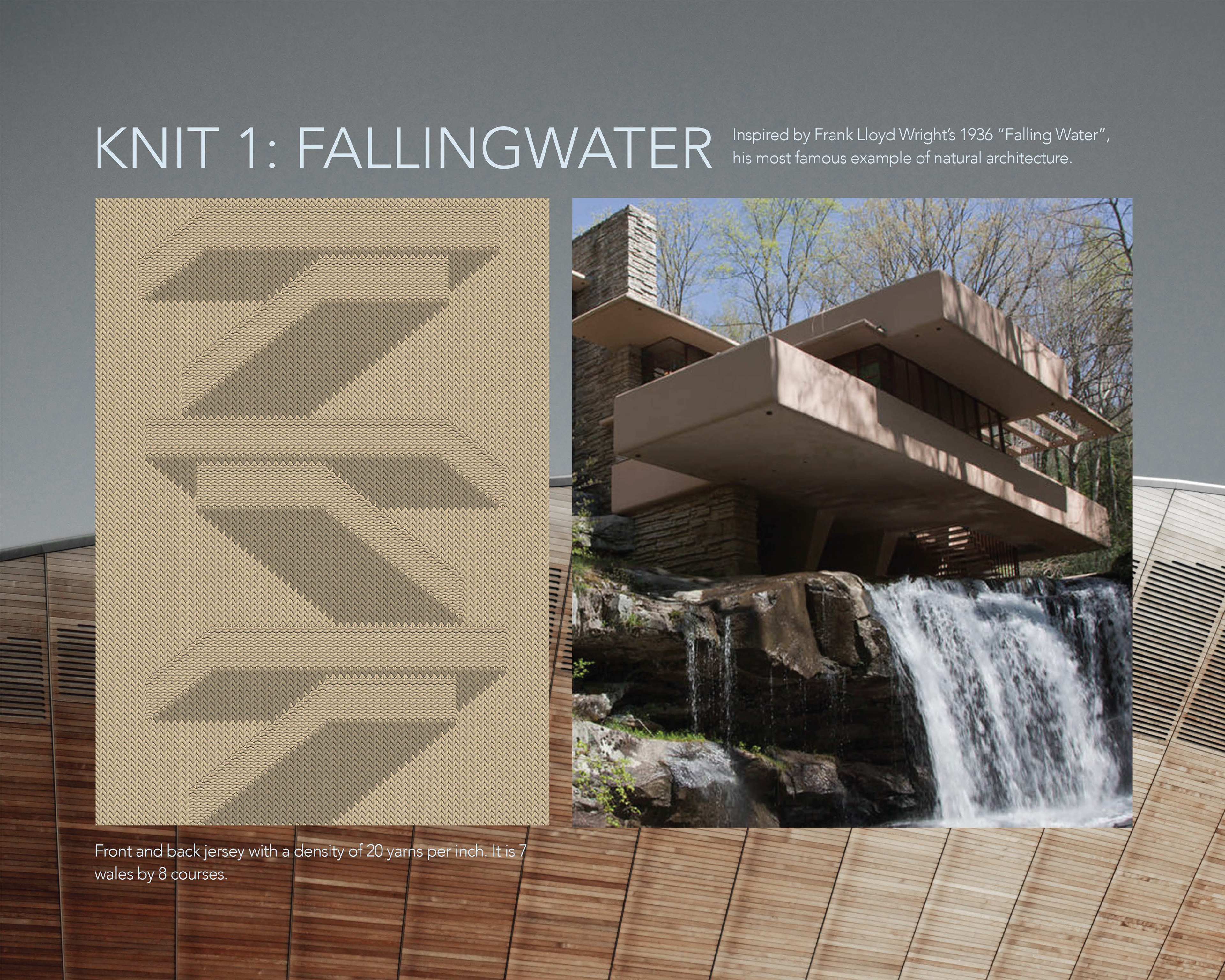
The first knit is inspired by Fallingwater, Frank Lloyd Wright's most famous example of organic architecture. Wright believed that buildings should work amongst nature, rather than compete with it. Wright put it as "No house should ever be built on a hill or on anything. It should be of the hill".
I was inspired by the shape of Fallingwater from below. I wanted to emanate the angular, cubic nature of the structure.
The building shows how how Frank Lloyd Wright's original take on organic architecture was incredibly angular. However, this interpretation changes throughout his design career.
The knit uses front and back jersey to create dimension between the shapes. The knit has a density of 20 yarns per inch, and is 7 wales by 8 courses.
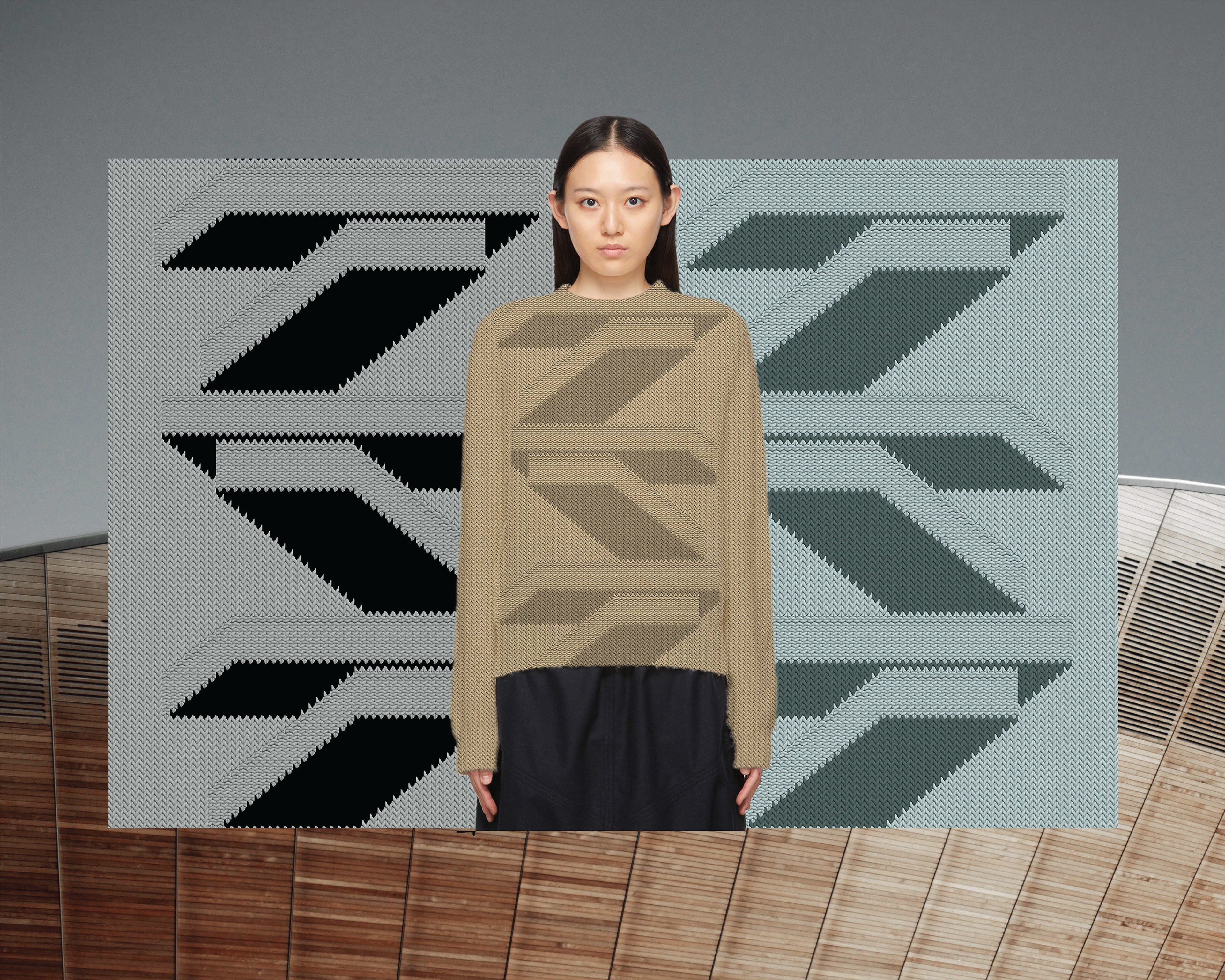
The final sweater design for Fallingwater, as well as other possible colorways.
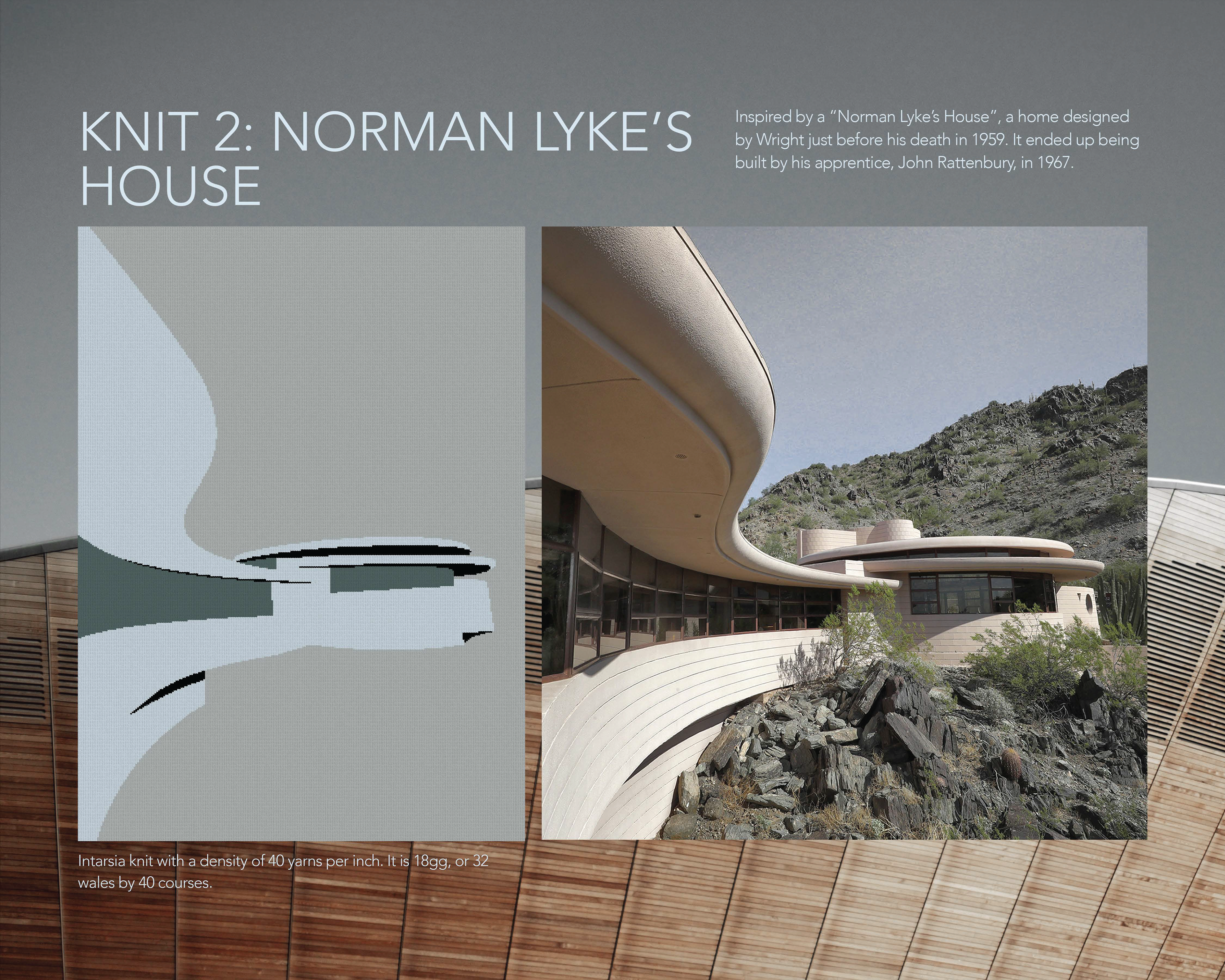
The second knit is inspired by Norman Lyke's House, a home designed by Wright just before his death in 1959. The home ended up being built by his apprentice, John Rattenburg, in 1967.
You can see that Wright's interpretation of organic architecture ended up using mostly curved lives and circular shapes.
It is an intarsia knit with a density of 40 yarns per inch. It is 18gg, or 32 wales by 40 courses.
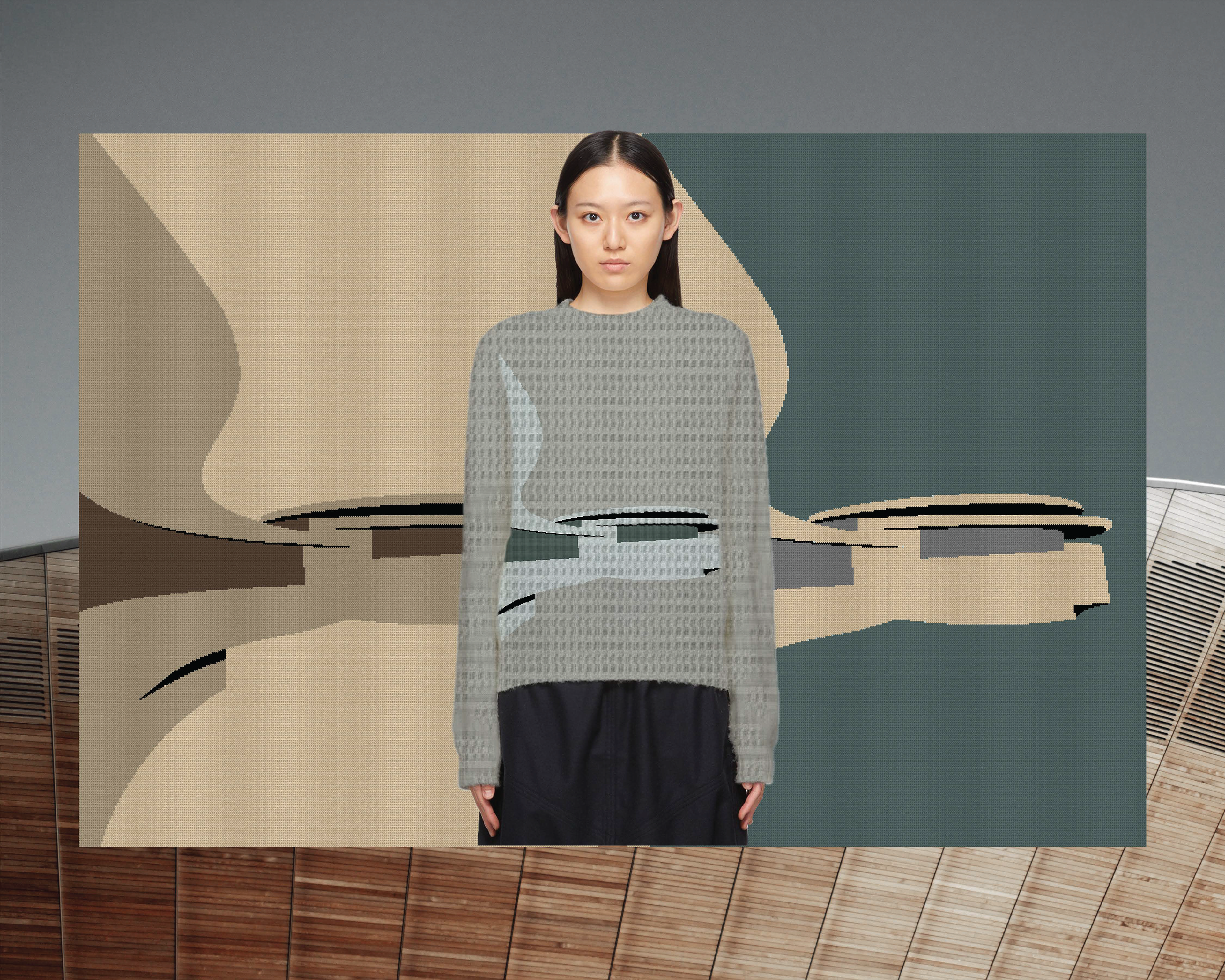
The final sweater design for Norman Lyke's House, as well as other possible colorways.
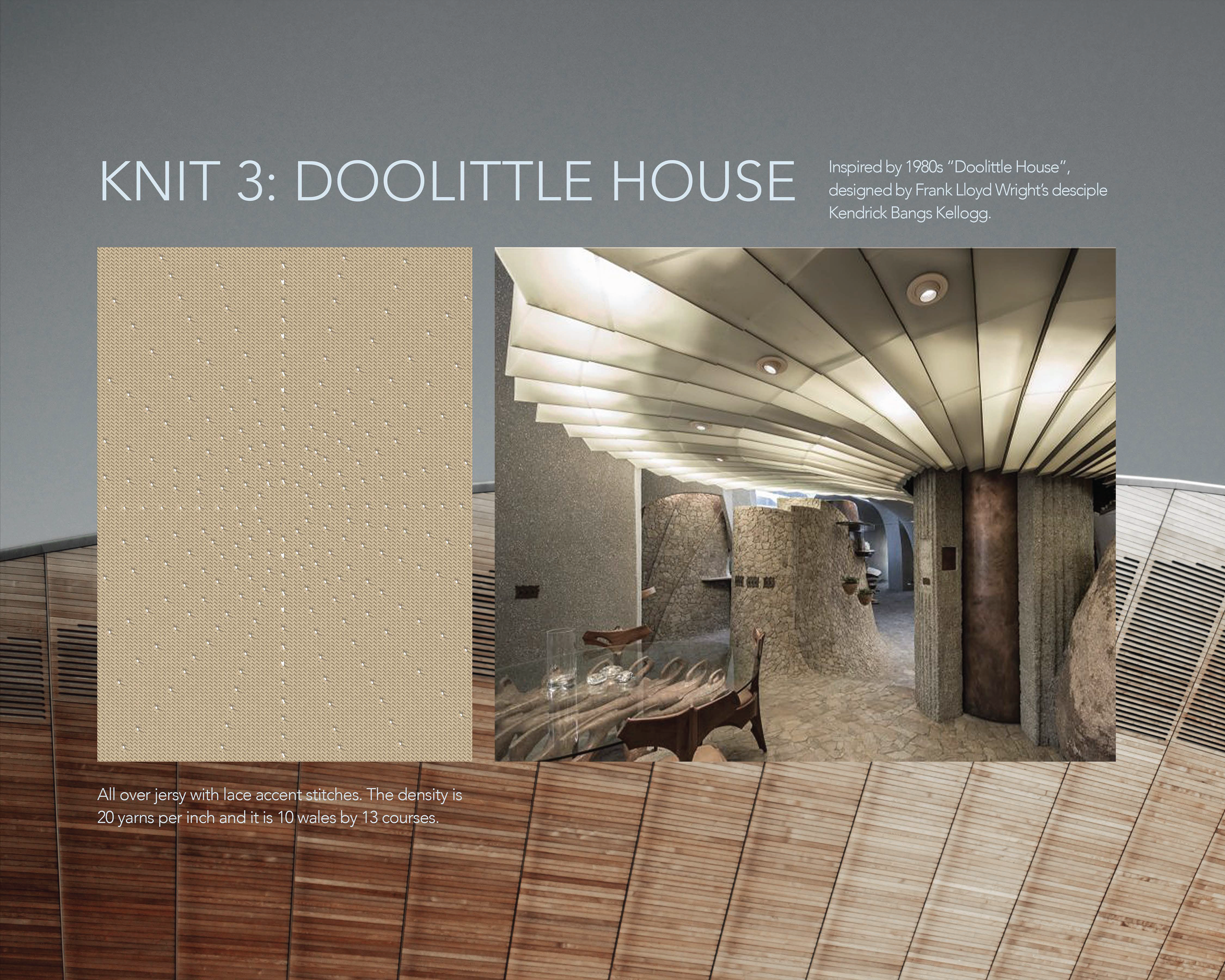
The third knit is inspired by the 1980's Doolittle House, which was designed by Wright's disciple, Kendrick Bangs Kellogg. You can see that the organic architecture aesthetic is now combining circular shapes with angles. It also is taking a more literal approach to organic architecture, with natural textures, materials, and forms.
I specifically took inspiration from the fanning light installation on the ceiling, and tried to emanate that through lace holes in my knit design.
The pointelle has lace hole accent stitches. The density is 20 yarns per inch and it is 10 wales by 13 courses.
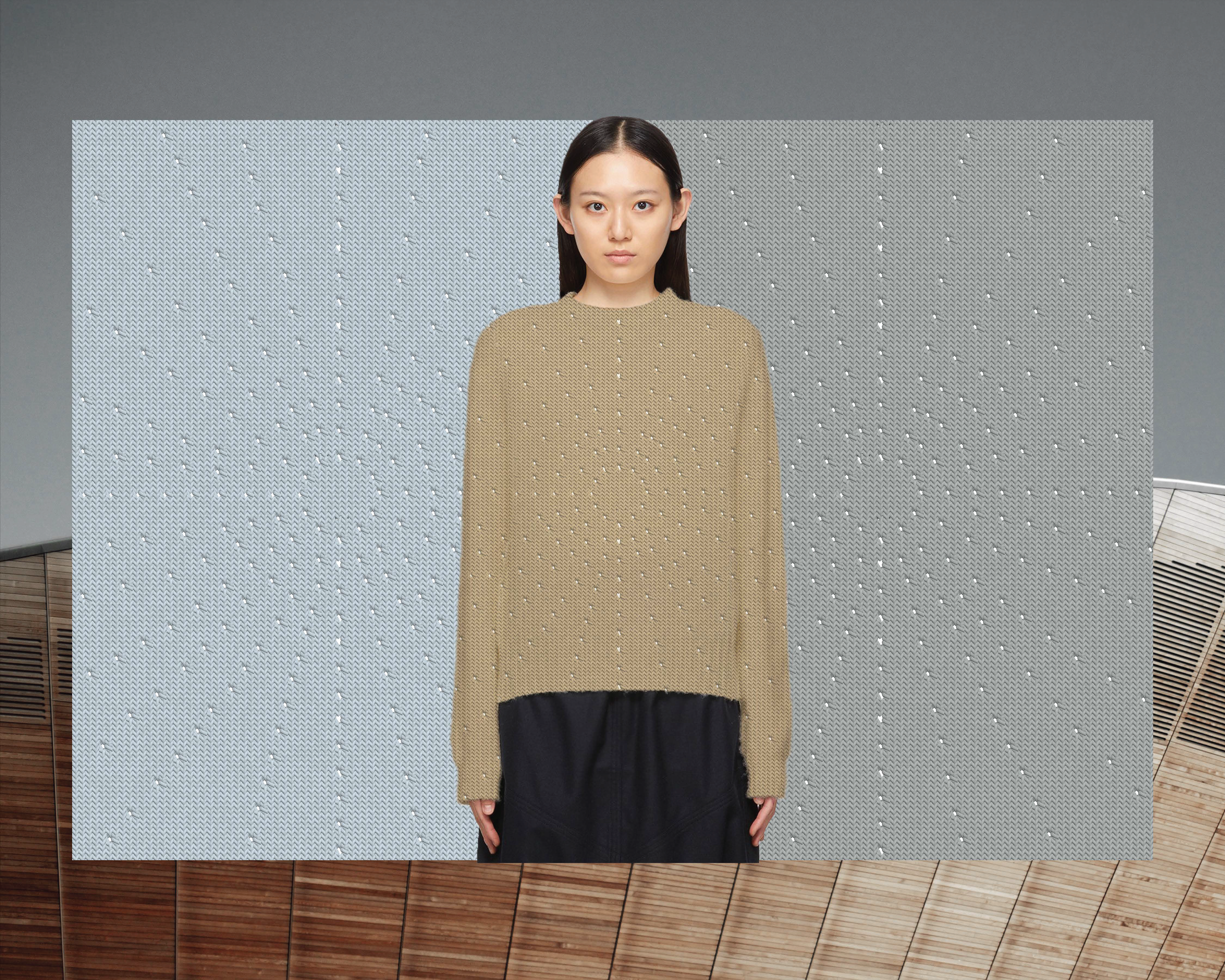
The final sweater design for Doolittle house, as well as other possible colorways.
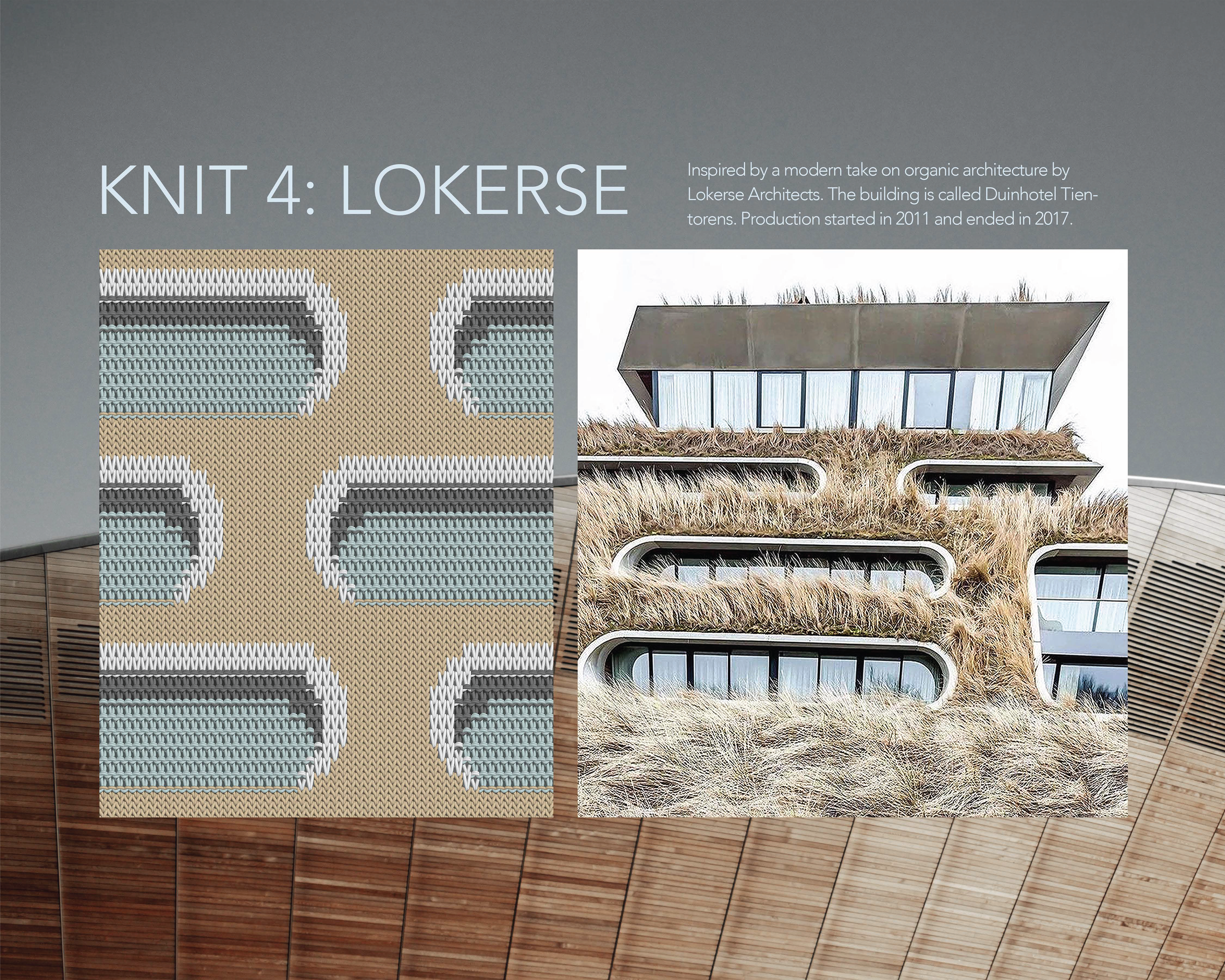
The fourth knit is inspired by a modern take on organic architecture by Lokerse Architects. The building is called Duinhotel Tientorens. Production started in 2011 and ended in 2017. This structure represents a modern yet literal interpretation of Wright's take on organic architecture -- "No house should ever be built on a hill or on anything. It should be of the hill".
The knit is a jersey will single front and back tuck stitches. The density is 20 yarns per inch and is 7 wales by 8 courses.
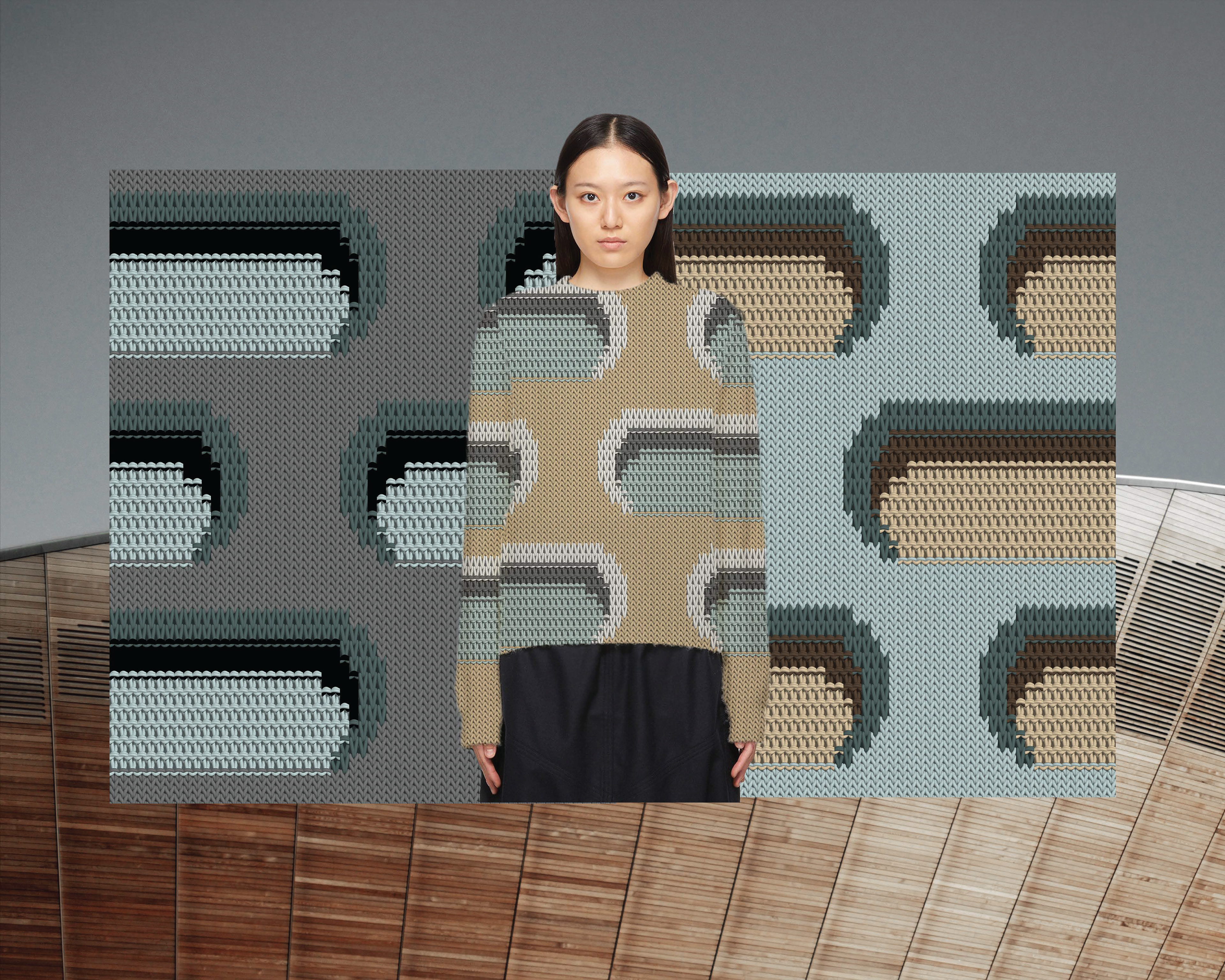
The final sweater design for Lokerse, as well as other possible colorways.